
Public Blog

Why We Have a Private Boutique
The WIMI Private Boutique is not designed to compete with large online retailers. Instead, it offers a deliberately small collection of sexual wellness products, marital aids, and therapeutic resources that I have personally recommended to clients and can vouch for. Each product is selected because it can serve a practical purpose in sexual health, coaching, therapy, or marital intimacy. Access to the Boutique is free with a WIMI account, and our selection will continue to grow as we identify and source additional products worth recommending.
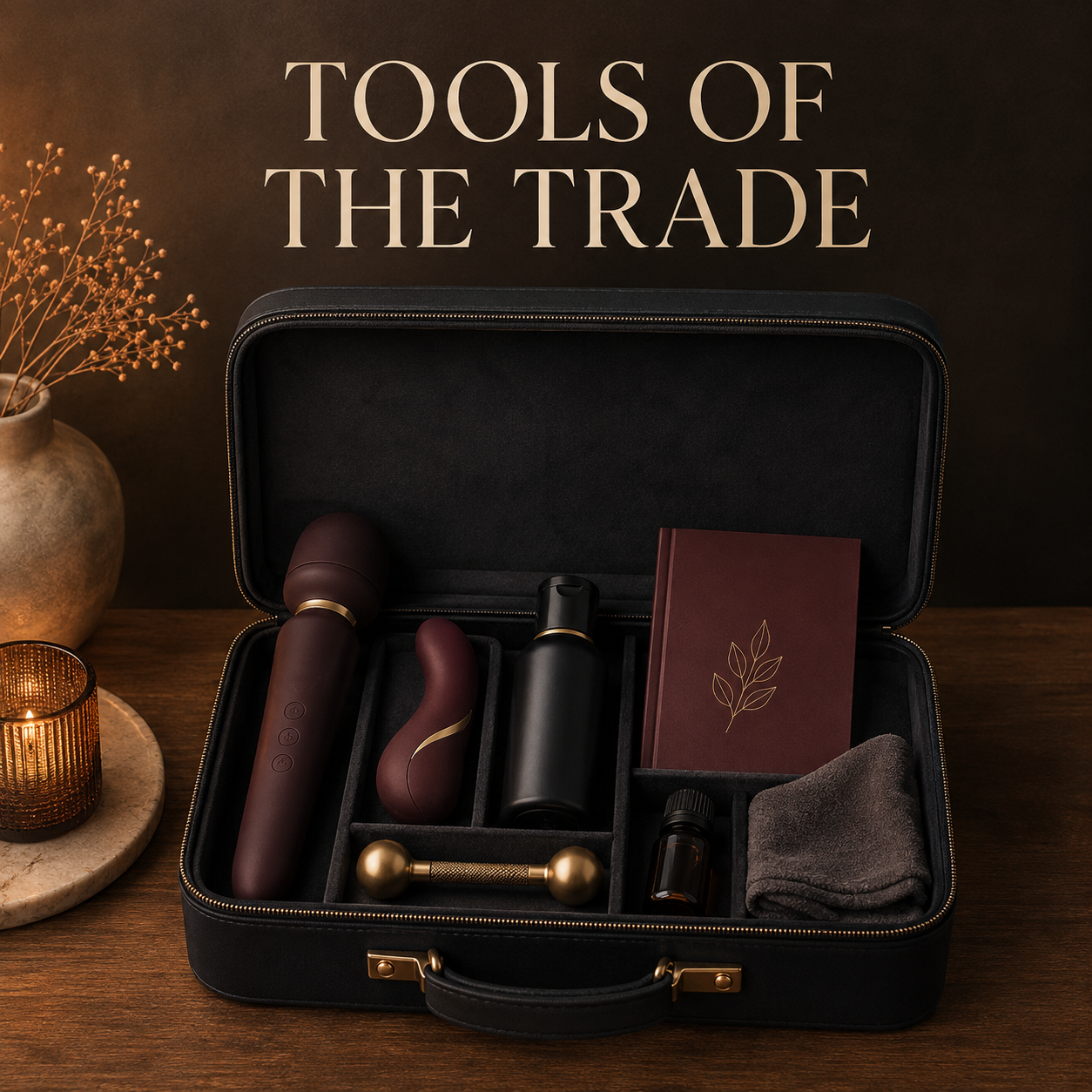
Tools of the Trade: Making the Right Resources Easier for Clients to Use
Recommending the right intimacy tool only helps when a client follows through and obtains it. WIMI helps therapists and coaches close that gap through consultations and customized client boxes containing carefully selected products, educational resources, and care supplies. Clinicians and clients can also explore WIMI’s deliberately small private boutique, where every product has been chosen for its quality and practical value. The goal is simple: reduce hesitation and guesswork so clients have the tools they need to take their next step.

You’re Allowed to Enjoy This: Permission and Pleasure in Marriage
Many couples aren’t limited by desire or knowledge, but by something less obvious: permission. They’ve never fully allowed themselves to enjoy sex, want more, communicate clearly, or grow beyond their current patterns. This article breaks down the hidden ways couples hold themselves back and how to move forward. If you’ve ever felt like something is missing, this may be the shift you need.

The Orgasm Gap: Why You’re Settling for Less And How to Fix It
The orgasm gap is real, and too many women quietly accept it as normal. But inconsistent pleasure is not something you have to tolerate. This article challenges you to stop faking, start communicating, and take ownership of your sexual experience. If you’re ready to raise the standard and consistently get your needs met, there is a clear path forward.

How Much “Stuff” Do You Actually Need for Great Sex?
How much do you actually need for great sex? Not much. But that doesn’t mean you should settle for routine and call it “good enough.” This article breaks down the difference between simplicity and complacency, and helps you figure out whether it’s time to improve, simplify, or start exploring something new. If you’re ready to stop guessing and build a sex life that actually works, this is your starting point.

Sex as an Art Form: Why Great Lovers Aren’t Born, They’re Trained
Most people assume sex should just “work.” But years of experience don’t automatically make you better. Great sex, like any art, requires skill, awareness, and intentional practice. If you want to become an exceptional lover, you have to stop guessing and start learning.

Normal, Distressing, or Diagnostic? How to Assess Desire Discrepancy Before You Try to Fix It
Most couples assume a desire mismatch means someone is broken, avoidant, or simply not trying hard enough. That is usually too shallow to be useful. This article explains how clinicians and informed couples can tell the difference between normal variation, meaningful distress, and a pattern that may require fuller evaluation. The goal is not to normalize everything or diagnose too fast. It is to assess the problem accurately before trying to solve it.

Better Lover, Better Skills: What Sex Therapists Mean When They Say Great Sex Is Learnable
Most people think great sex comes down to chemistry, confidence, or luck. Therapists tend to see something else: skill. This article breaks down what “being a better lover” actually means in clinical terms, from responsiveness and communication to feedback and emotional presence. If your sex life feels repetitive, tense, or harder than it should, the problem may be less about compatibility and more about what no one taught you to practice.

How Often Should You Be Having Sex? (You’re Asking the Wrong Question)
How often should couples have sex? There is no universal number, and focusing on frequency alone often misses the real issue. What actually matters is whether both partners feel satisfied, connected, and desired. If you are unsure where to start, try having sex twice a week for a few months and reassess. If that does not improve things, the problem is likely deeper than frequency.

Do We Need a Sex Coach? If You’re Asking, Read This First
If you’ve ever wondered, “Do we need a sex coach?” you’re not alone. That question usually isn’t random. It’s a sign that something in your intimate life isn’t working as well as it could. The good news is, you don’t have to stay stuck there. Sometimes, one conversation is all it takes to gain clarity and start moving forward.
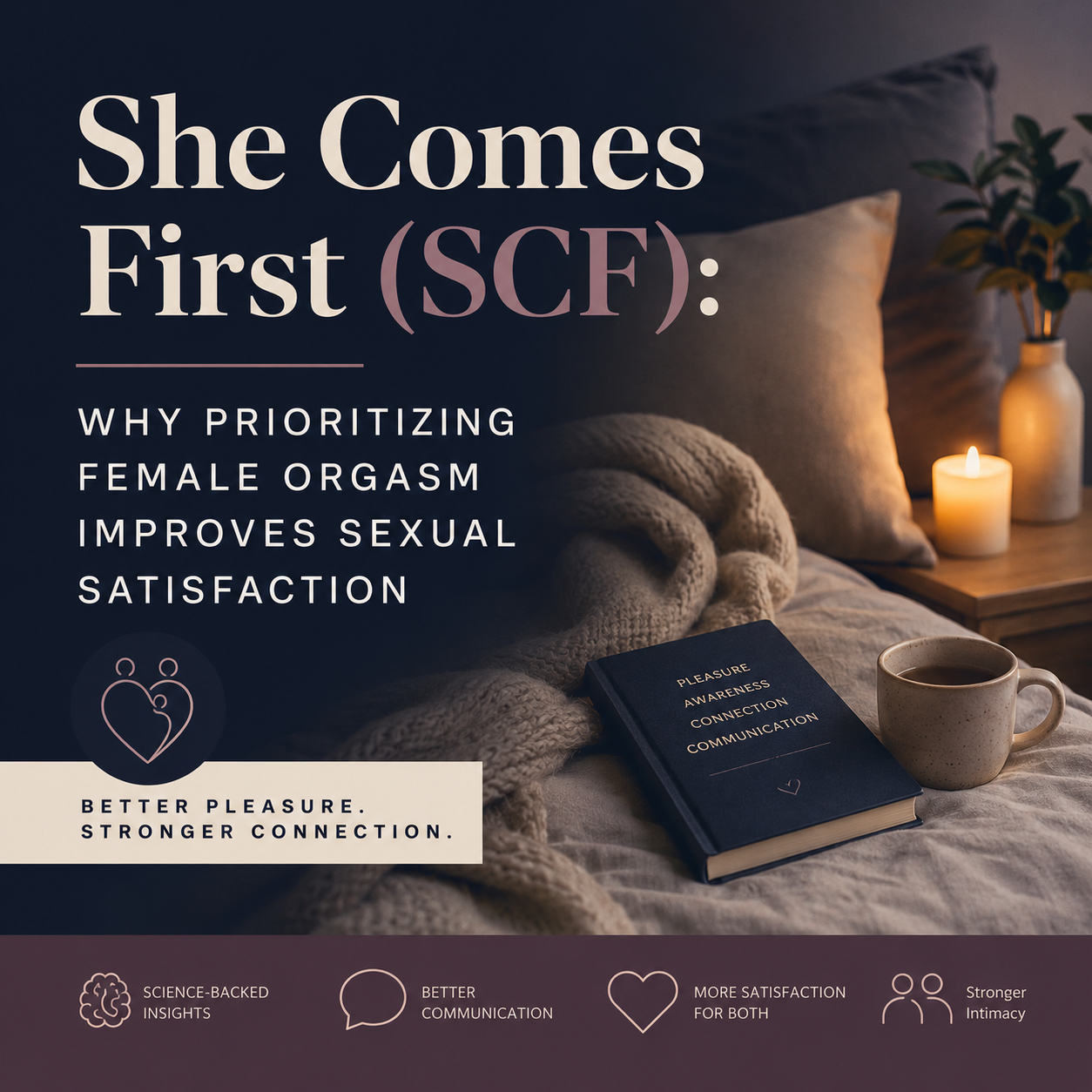
She Comes First: Why Prioritizing Female Orgasm Improves Sexual Satisfaction For Everyone
What if one of the simplest ways to improve sexual satisfaction was to rethink the order of orgasm? Popularized by Dr. Ian Kerner, the “She Comes First” (SCF) framework argues that prioritizing female pleasure often leads to better sex, stronger emotional connection, and reduced performance anxiety for both spouses. This article explores the research behind the orgasm gap, the biological differences in male and female arousal timelines, and why intentional attention to female pleasure may improve mutual satisfaction. Grounded in contemporary sex research, this WIMI article examines SCF through a more academic and evidence-based lens.

Sexual Excellence Without Perfectionism: A Better Standard for Long-Term Couples
Most couples are using the wrong standard for judging their sex life. They confuse great sex with perfection, chemistry, or effortless compatibility, then panic when real relationships get messy. This article offers a better model: sexual excellence as a learnable skill built through responsiveness, feedback, and realistic expectations. That shift is not just more hopeful. It is more clinically accurate.

Integrating the PLISSIT Model into Solution-Focused Brief Therapy: A Philosophically Coherent Approach
Can the PLISSIT model be integrated into Solution-Focused Brief Therapy without contradiction? Many practitioners use both, but few examine whether they align philosophically. While SFBT emphasizes collaboration and the client as the expert, PLISSIT includes education and specific suggestions, creating an apparent tension. This article argues that the conflict is not real but misunderstood. By distinguishing between the client’s expertise in their lived experience and the practitioner’s expertise in their field, and by reframing interventions as collaborative experiments rather than prescriptions, PLISSIT can be fully integrated within an SFBT framework, allowing practitioners to remain both philosophically coherent and practically effective.

We’re Building Something Here. You’re Invited.
We’ve been building this platform quietly since September, and now it’s becoming more intentional. With new articles coming every other week and deeper, more practical content on the way, this is where honest conversations about sexual intimacy are happening. Most of that content lives inside the members-only blog, which you can access with a simple $5 lifetime membership. If you’re finding value here, joining is the next step. And if you want to go beyond reading and actually apply it, coaching is always available.

Decompression & Reconnection
After a long day, many couples struggle to reconnect because their minds are still caught in work, stress, or unfinished responsibilities. Even when you are physically together, emotional distance can creep in and lead to frustration or resentment. Reconnection does not happen automatically. It requires a deliberate transition out of the day and into your relationship. In this article, we explore simple ways to decompress so you can be fully present with your spouse again. (republished from October 2, 2022)

Sensate Focus: Why Trying Less Often Leads to More in Sex
Many couples discover that the harder they try to fix their sex life, the more pressure and anxiety they feel. Sensate Focus offers a counterintuitive alternative: stop trying to make arousal happen and redirect attention to simple physical sensation instead. In this article, I explain why this paradox works, how Sensate Focus functions as an attentional discipline rather than a technique, and why it plays a foundational role in my sexual intimacy coaching at WIMI.

Pornography: Choosing the Lesser Evil in a Broken Industry
Pornography will not disappear, and many people who want chastity still feel unable to quit. This reflection explores why mainstream porn causes real harm and why, for those not yet ready for abstinence, choosing the lesser evil matters. If you are still working toward freedom, there are safer and more honest steps you can take starting today.

Confronting the Philosophical Foundations of Modern Sexology: Why the Discipline Needs a Scholastic Re-Foundation for Meaningful Scientific Progress
Sexology has made enormous empirical progress, yet its core models still leave many people feeling unseen. This article explores why the field struggles to integrate meaning, relationship, and purpose into its scientific frameworks and argues that a return to sound philosophical foundations can strengthen both research and clinical care.

Meet the Not Weird Sex Coach
Most sex coaches highlight how comfortable they are working with every niche identity and subculture on the internet. That is great, but it can leave normal, married, heterosexual couples wondering if anyone still helps people like them. This article introduces my work as the not weird sex coach. I help ordinary couples improve intimacy without pressure, agendas, or strange vibes. If you have ever wanted support that feels grounded, human, and respectful of your values, this one is for you.

Guided Vaginal Self Exam: A Theory-Based Body Literacy and Embodiment Intervention for Women Experiencing Genital Disconnection
Many women carry fear, shame, or uncertainty about their bodies after difficult medical or sexual experiences. The Guided Vaginal Self Exam offers a private, nonsexual way to reconnect with the body through gentle, self-directed exploration. This approach adapts select elements of the Bodysex method while honoring modesty and personal values. It combines accurate education, structured self-touch, and trauma-informed pacing to help clients view and understand their anatomy with confidence. This article explains the theory behind the intervention, outlines the safeguards that make it ethical, and shows how it may support healing for women who feel disconnected from their bodies.