

How well do you actually know your spouse’s sexual likes, dislikes, boundaries, curiosities, and preferences?
Yes, No, Maybe is a comprehensive couples workbook designed to make those conversations easier. Rather than guessing what your spouse enjoys or waiting for an awkward moment to bring something up, each spouse works through structured questions and then compares answers without judgment, rejection, or pressure.
The guide begins by helping couples discuss the foundations of their sexual relationship, including consent, initiation, priorities, boundaries, sensitive and preferred areas of the body, health considerations, comfort, foreplay, aftercare, and sexual language. From there, the Yes, No, Maybe guide provides a simple framework for identifying what each spouse wants, does not want, or may be curious about discussing or exploring together.
The workbook concludes with guided reflection and discussion questions that help couples identify areas of mutual interest, talk through differences, recognize barriers to physical intimacy, and choose practical next steps together.
Whether you are preparing for marriage, have been married for decades, or simply want to understand your spouse better, Yes, No, Maybe provides a structured way to talk about sex with greater clarity, honesty, and confidence.
Length: 34 pages
Most married couples are not struggling because they lack love or attraction. They struggle because they lack clarity.
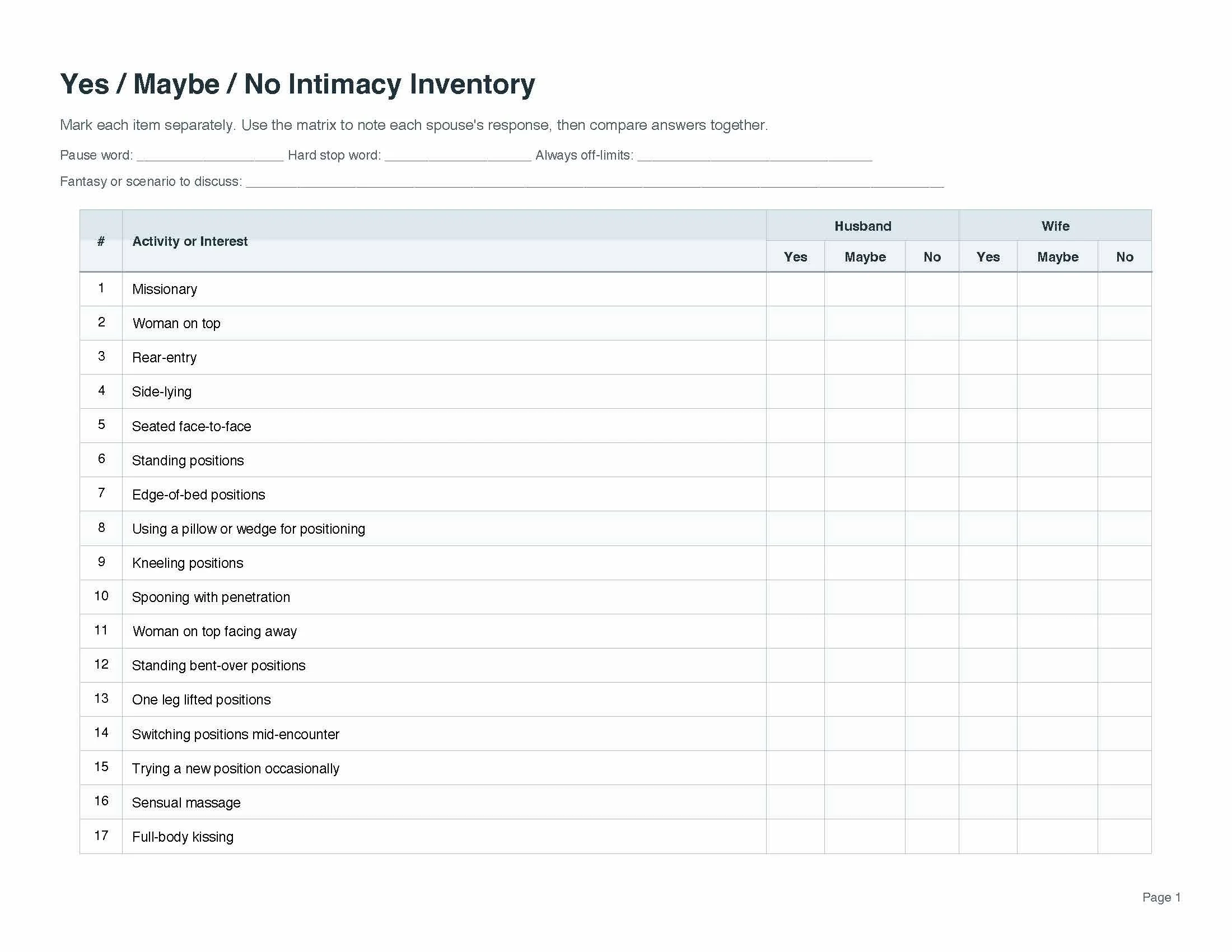
The Yes / Maybe / No Intimacy Inventory is a simple but powerful tool designed to help couples move from uncertainty to confident, respectful communication about their sexual relationship.
Instead of awkward conversations or guessing what your spouse might want, this guided worksheet allows each spouse to privately reflect and then compare answers in a calm, structured way. The result is greater understanding, fewer assumptions, and a clearer path forward.
This inventory walks couples through a wide range of areas, including:
Positions and physical dynamics
Types of touch and stimulation
Pacing and style preferences
Settings and atmosphere
Toys and accessories
Erotic novelty and power dynamics
Each item is marked as Yes, Maybe, or No, helping couples quickly identify:
Shared interests (where to start)
Areas of curiosity (where to explore carefully)
Clear boundaries (where to respect and move on)
This is not a test, a demand list, or a performance checklist. It is a communication tool designed to:
Reduce tension around sexual conversations
Build mutual understanding
Increase confidence and honesty
Help couples grow their intimacy at a sustainable pace
Used well, this inventory becomes a repeatable framework couples can return to over time as comfort, trust, and openness develop.
By the Walther Institute for Marital Intimacy
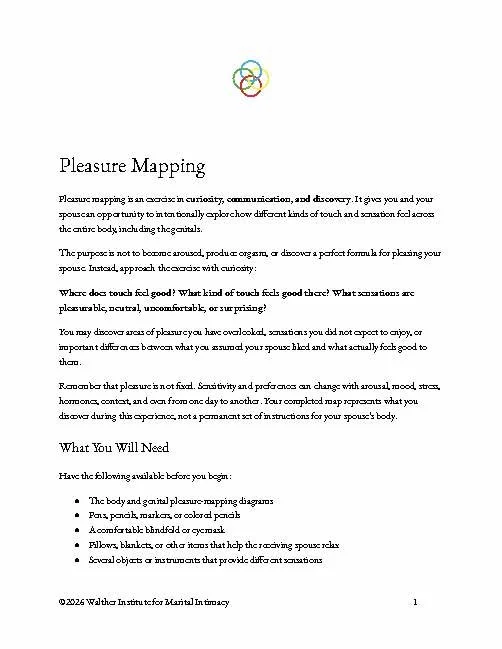
Discover more of what feels good, where it feels good, and how you and your spouse can communicate about pleasure with greater confidence.
Pleasure Mapping is a guided, at-home exercise that helps spouses explore one another’s bodies with curiosity and intention. Rather than relying on assumptions or familiar routines, you will take turns exploring different types of touch, pressure, movement, texture, temperature, and sensory tools while learning to give and receive clear feedback.
Using included whole-body and genital diagrams, each spouse creates a personalized pleasure map that records areas and sensations that feel especially pleasurable, pleasant, neutral, or uncomfortable. The exercise encourages exploration of the entire body and helps couples discover not only where touch feels good, but how each person prefers to be touched.
Pleasure Mapping is designed to help you:
Discover overlooked or unexpected areas of pleasure
Learn your spouse’s preferences for different kinds of touch and sensation
Communicate more comfortably and specifically about what feels good
Replace assumptions with curiosity and real-time feedback
Develop a richer understanding of each other’s unique responses
Build skills that support greater connection and responsiveness during sexual intimacy
The goal is not orgasm or sexual performance. The goal is discovery.
Your completed maps provide a useful snapshot of what you learn, but the deeper value comes from practicing a different way of approaching intimacy: explore, notice, communicate, listen, and stay curious.
Includes: Step-by-step partner instructions, whole-body pleasure-mapping diagrams, genital pleasure-mapping diagrams, and guidance for exploring different types of touch and sensory stimulation.
This handout is priced at $0.99 to make practical clinical resources easily accessible to practitioners.
Note: This content is also included in the WIMI Private Journal for those who prefer full library access.
No results match your search. Try removing a few filters.